A Peek Behind the Scenes

A couple of Sundays ago I ‘performed’ a painting for the Vancouver church of Christ.  I feel very strongly that Art is a type of language- a ‘tongue’ in the Biblical sense, if you will.  Therefore, I also feel very strongly that for it to be truly edifying to the body, as instructed in I Corinthians 14, that there should be some interpretation provided.  Jay Baker, our preacher, posted some of his comments.  Here are some of my own thoughts.  But first, some philosophizing on the concept of artistic interpretation.

What follows in one sense is not interpretation.  Interpretation in the sense of meaning really only happens in the encounter between the viewer and the artwork.  It involves the viewer’s connections with the work, their own experiences, feelings, and memories coming to bear on the experience of looking at the artwork.  What follows are my reasons for the actions I took/decisions I made in creating the artwork.  It flows from my experiences and feelings and memories that are brought to bear on the ideas Jay presented to me in association with certain Biblical passages.  In other words, the process of creating meaning doesn’t end with my thoughts on the matter, but extend with your own connections with the work.  Please do not take what I say here as trumping any meaning you may derive for yourself or thinking for yourself.

Okay.  Let’s get on with it.

I don’t generally like the concept of merely ‘illustrating’ a sermon. The capability of Art to convey/create a meaningful experience is far larger than just a picture/image of a text or story.  I’ll get into more detail about that later but basically I like to work with some, more general information rather than specific instructions on a picture or story to illustrate.  So Jay gave me his basic thrust for the sermon and the books and chapters of scripture that he was drawing from:

Synopsis: The “two” messages are the same: Emmanuel – God with us.  The first 2/3 of the sermon will be exploring the significance of what it means for God to be with us.  We’ll look at several scriptures about how Jesus was present with people in different circumstances (call to follow; party Jn 2; fear Mt 8; embarrassment Mk 5; friendship Lk 5; death Jn 11…).  I’ll close this section with a video called “Four Words” …  I’ll then do a short piece on the “second” message of Christmas” Emmanuel – God is with the world through us.  We are now his body, his presence, in the lives of those around us, in each of the above kinds of circumstances.  I’ll close with Mt 28 – an articulation of both messages: 1st message: 28:20b; 2nd message: 28:19-20a.

Now, Picasso once said “Good artists borrow, great artists steal.”  So in an effort to be a great artist I decided to steal a couple of characters from Leonardo DaVinci’s Last Supper fresco.  What’s fascinating about Leonardo’s depiction of this scene is that each of the Apostles is shown reacting in a completely different way to the news that one of them will betray Christ.  I thought this dovetailed nicely with the idea that there are different circumstances and different types of people that Jesus interacts with in the texts Jay was speaking on.  I thought a nice extension of this concept would be to have multiple panels, each with one person, created with a different medium and/or in a different style.  So one panel is straight painting, another is with charcoal, another utilizes collage and text, yet another in pastel.

 In reading the chapters Jay listed, I realized some of them have multiple stories that could be used.  I decided against checking with him (in keeping with my intention to not be straight illustration) and instead let the concepts, stories, and stylistic/imagistic ‘cook’ in the back of my head until I had something that worked for me.  So, for example, I ended up alluding to the story in Matthew 8 where Jesus sends out some evil spirits into a herd of pigs instead of the ‘Calming the Storm’ account that Jay used in his sermon.  C’est la vie.

Incidentally that panel took on different meaning for me and is thus a great example of what I feel the real power of Art is.  I’ve always been intrigued with the story of the demons being sent into the pigs- it’s kind of an odd story.  So I saw visions of these pigs being stenciled onto the canvas- thought this panel, in the pantheon of styles, could be a more contemporary approach, using collage, and perhaps be a bit more abstract.  Then I realized that where this panel would fall in the sequence would be the image of Judas.  And it got me thinking:  Jesus could have sent Satan out of Judas just like He sent the demons into the pigs.  Why didn’t He?  It begs the question, “What does it all mean?”

And that’s where the magic is- the insights and thoughts that I get from looking at, thinking about, and actually making the art.  A picture or illustration is pretty simple.  You think of the picture.  Then you paint it.  You see it.  You recognize what it is.  But that’s it.  But when you start playing around with the thoughts and images and then it leads you to see and think things that you wouldn’t have thought in the first place- then that’s cool.  Sometimes an image can do that, but for me it occurs more with a mix of images, materials, abstraction, symbolic- all these things slowly simmering in my little brain.

Okay, so let’s look at that question “What does it all mean?”  With the different approaches I was taking – and especially with the stenciled pigs- I thought that might be a question that arises in viewers mind.  So why not make that explicit and play around with that?  Here is a thing about ‘performing’ a painting that I sometimes utilize- the time aspect of performance.  I decided to actually tape that question onto the painting and let it stay there awhile as I was painting different parts of the painting- fully intending to change it by moving some of the letters around but allowing it to be seen for awhile during the ‘performance.’  I didn’t move the letters too much- they are all still in the correct order- but I did some creative ‘word-wrapping’ to align certain letters to create the words ‘he’ and ‘me’.  I did this to emphasize one of Jay’s lessons- that we (me) are to be Jesus (he) to the people around us.

That last statement could be read as an interpretation, but again, see it as my reasoning for the decisions I made in making the work.  Interpretation is a process that you, as the viewer, go through in experiencing the work for yourself.  But as far as making art is concerned, the artist is faced with a number of decisions- it is, in essence, a physical process of thinking.  So here are a couple of other decisions I made.

  • I switched Jesus’ left and right hand positions from Leonardo’s original.  I thought the panel that had Judas reaching for the bread (remember he was dipping in the same bowl as Jesus) should be the ‘death’ panel.  In Leonardo’s painting Jesus is also reaching for the bread.  But I decided to have the open-faced hand so that I can tie into the death theme by having the nail-scarred/bleeding hand.  
  • I took out some characters because they didn’t fit with the theme that I came up – that of having one person per panel.
  • Perhaps the biggest decision I made, in regards the message that we are the presence of Christ in the this world, was to paint Jesus on a mirror.  When you look at Him you also see yourself.  

(In an effort to further prompt your own thinking, insert your own ending to this blog post here.)

Cause and Effect

One of my favorite artists is a guy named Robert Irwin.  I won’t go into much about his artwork right now- we’ll save that for a future post.  But lately I’ve been thinking about mimicking something he did. He once took about a year off from producing any artwork (okay, I’m not going to do that part) to focus on understanding some things.  He was reading a book by the philosopher/aesthetician named Hegel. He wrote down each statement that Hegel wrote in one color.  Then took another color and wrote his responses.  That was all he did for a year.

I think I want to do that, too.  While thinking about it I was struck by something.  No doubt my responses would be different from Robert Irwin’s.  I would be drawing from different experiences and be approaching it from a different place, a different mindset.  However, much of my experience and mindset come from the influence of Robert Irwin’s artwork and thinking.  So that thought very much intrigued me.

In responding to and digesting Hegel’s work, Robert Irwin helped create a philosophical/intellectual situation that would influence me, which in turn would cause me to respond to Hegel’s work in a different way from Robert Irwin…

Untitled Document

I don’t think you’re going to like this.  I could be wrong.  But I’m pretty sure some of the thoughts that have been rolling around my head lately are going to rub some people the wrong way.  Sorry.

First item:  America is the inheritor of a rich set of values, beliefs and thought structures affectionately known as the Western Tradition.  It essentially began with the Greeks, right?  Our scientific method of understanding flowed from the intellectual rigor of the Greek philosophers like Plato, Aristotle, Pythagoras, all those guys.  And our system of government, with it’s chief value of representing the people through a democratic process, owes its origins to the ancient Greek and Roman empires as well.
Here’s the rub- Paul said in I Corinthians that the gospel is foolishness to Greeks.  In other words, the intellectual tradition of the Greeks, which has matured and progressed to its current state in our modern times, is categorically opposed to the ‘logic’ of God as expressed in His story of salvation.

Second item:  About this intellectual tradition.  We’ve gotten so good at it.  The amount of stuff we’ve been able to discover;  the technological breakthroughs we’ve had; the libraries we have filled with the amount of information we have learned.  And we’ve unleashed this power on our understanding of God as well.  Countless tomes have been written arguing for the correct interpretation of scripture, what we should do and should not do, what the right way to worship is, what the right political party is and what are the correct votes we should cast for particular measures.  It amazes me.
But here’s the rub, part 2- What was the tree in the Garden that Adam and Eve shouldn’t have eaten from, the one that caused the Fall?  Wasn’t it the Tree of the Knowledge of Good and Evil?  So all the activity we spend on observing, discussing, arguing, data processing, conclusion drawing about what is right and wrong turns out to be the VERY activity that caused the Fall, that essentially was the Fall itself.

So essentially, the entire culture that I have been raised in, that we all have been raised in, is one that continually seeks right and wrong- which is essentially the Fall- using the intellectual apparatus of a culture that is antithetical to God’s salvation story.

Is it just me or is this cause for concern?

Ruminations on Verisimilitude

Most of the time, well…all of the time, really, I write a blog with a clear goal in mind- I have a point that I’m trying to get across. Not so with this one. I’m thinking in the open here. I spent this past weekend chaperoning a retreat for Jr. and Sr. high schoolers from Columbia Christian schools at Camp Yamhill. As usually happens, a couple of artistic things occurred. One I’m making a video of, so you’ll get to see that later, the other was a quick sketch I did of one of the students.

Lydia, by yours truly

 In my admittedly casual pursuit of better draughtsmanship, this effort frustrated, then fascinated, me.  It is generally believed that verisimilitude is the goal of a good drawing- the more it looks like what you’re drawing the better it is.  In my mind I know that isn’t necessarily the case but it’s still what I strive for.  Or so I’m wondering…

Truthfully, when I look at Master drawings that inspire me, I look primarily at the marks the artist uses- how did he/she do that?  I’ve been striving for a mastery that reveals itself in efficiency- a sure, quick line that captures the subject without a lot of fuss.

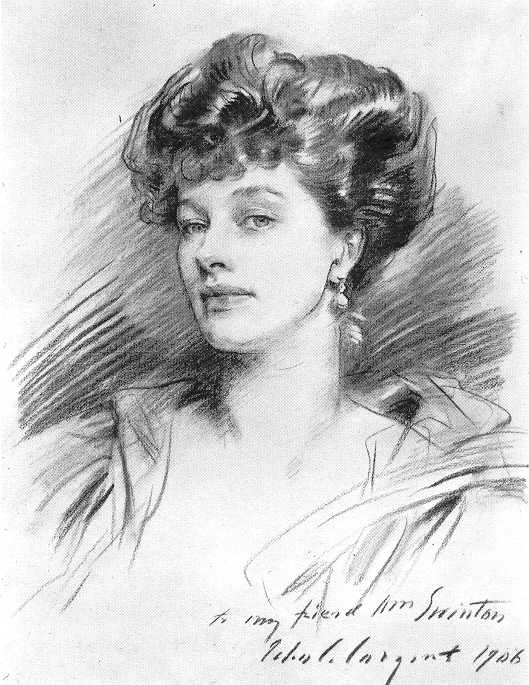
Not only does the line capture efficiently, but also expressively.  I’ve been looking a lot at portrait drawings by John Singer Sargent and have been jealously mesmerized.  They have all the qualities I’ve tried to instill in my drawing, including what appears, at least, to be a high degree of verisimilitude.  What I’m beginning to discover, though, is that may not always be the case.

I’m always struck when ‘non-artists’ look at one of my drawings of someone and exclaim, “Wow! It looks exactly like him/her!” when I look at it and see how much it doesn’t look like the person I was trying to draw.  Which is exactly what I felt upon completing this drawing.  For the first couple of days after I drew it I would look at it and almost get depressed- it was way off the mark of what I was attempting to do.

Mrs. Swinton by John Singer Sargent

 I would pull out my book of Sargent drawings and compare them to this- trying to discern how I could have done it better.  And while I have come up with a few ideas, the opposite has also occurred- I see some things that are pretty good and the drawing is ‘growing’ on me.  Which is fascinating for a couple of reasons

One, the further I get away from the actual drawing event, and thus after a fading of the memory of her actual face, the better the drawing looks.  There is a quality that I’ll call ‘specificity’ that lends it the sense that it actually looks like a real person, though you may not know what the person looked like.  I have sensed this quality in Sargent’s drawings and thus assumed that his portraits faithfully render his subjects’ faces.  Thanks to our good friend Google, I’ve had the opportunity to compare some of his drawings with photos of the actual people.  Yeah, he’s good, but there’s a certain degree of variance that  I honestly think I fall within in terms of how much it actually looks like the person.  So I’m reassured,… somewhat.

But Sargent’s works still display a confidence and an expressiveness that mine lack to a large degree.  And part of the verisimilitude that I was trying to achieve has more to do with a certain quality I perceived in her face, features that I would describe as ‘strong,’ that I don’t feel I captured.  But what I find interesting is what is expressed, which is a certain timidity on my part.   So I find that regardless of the characteristics of my model, what I draw are representations of myself- my uncertainties, my limitations.  It takes an extreme amount of courage to do a drawing- especially one that is characterized by ‘strong’ features.

Maybe I’ll have the opportunity to draw her again.  But certainly there will be other faces, other characterizations, other chances to make some marks on a piece of paper, and other chances to learn- about drawing and about myself.

Meditations on (the) Resurrection

Easter.  Resurrection Sunday.  Most of the family is sick so the one Sunday when many people actually go to church, we elected to stay home and rest.  But G-d intervened in a powerful way for me.  While ‘worshipping’ in my studio, aided by a brief look at Facebook (the best spiritual insights come from the most unspiritual of means/places) I came across this:

 I don’t follow dance so I had no idea who Trisha Brown was/is.  Sometimes it is helpful to know the artist and their intentions to get into a work, and much of my time is spent reading, watching videos, etc. to find out about an artist and what they’re all about.  Other times, though, a work is so powerful, so affecting that an immediate connection is made, and the meaning of the work has less to do with the artist’s intentions and more about the viewer’s reception, the consequences of the work.

Watching these ‘dancers’ writhe and struggle their way through endless combinations of ‘dressing’ and ‘undressing’ I was struck by this powerful visual metaphor that embodied several things I have been thinking about lately and brought them together into a deeper understanding of the idea of Resurrection.

1.  Talking and Listening.  My wife and I recently went through a marriage coaching training where we were (re)introduced to patterns of communication, in this case, between married couples.  I had come across similar concepts in a phenomenal book called Solving Tough Problems by Adam Kahane.  Both describe specific ways of talking and listening that emphasized the necessity of empathy.  The speaker is to frame statements in a form that invites empathy.  The listener’s role is not to answer or offer a rebuttal, but to understand, to empathize, to gain a perspective that is the other’s perspective.  To stand in their shoes… or, in the case of this video, to put on their clothes.  In a Resurrection sense, it breathes new meaning into Romans 13:14: “Rather, clothe yourselves with the Lord Jesus Christ, and do not think about how to gratify the desires of the flesh.”

2.  Identity.  Who are we?  I think often the trouble we have with listening as described above is the danger of losing ourselves.  If we are the listeners then we have no voice of our own.  We want to be the ones speaking and being validated.  We want to wear our own clothes.  But are those clothes really ours?  Watching the two ‘dancers’ struggle to fit into different clothes in the improbable space of suspension from ropes, I saw (or rather felt- a sign of good art is that seeing and feeling are inextricably intertwined) the struggle, the tight-wire act that we all perform in society.  We fight for our belonging in this society, twisted and turned every which way among the ropes of peer pressure, job demands, religious convictions, and physical desires to name just a few.  And those of us belonging to a religious tradition struggle with the concept of ‘clothing ourselves with Christ.’  Of taking on the identity of Christ.  Of being like Christ in this world.

3.  Responsibility.  My wife and I have lately been watching the series ‘Sons of Anarchy.’  It’s a show about a motorcycle club/gang that runs an illegal gun trade and pretty much runs the small town where they live.  (Again- an unlikely setting in which to have spiritual insights, but here we go.)  We are fascinated by the sense of loyalty and responsibility that pervades the members of the club.  You don’t have to be a member of the club.  Many of the members’ childhood friends are still that, friends, even though one is in the club and the other is not.  However, if you choose to be in the club, you have a responsibility to the club and to its business.  You don’t have a choice.  If you choose to join, you are choosing to put yourself in a position where you don’t get to choose what to participate in and what you don’t.  I was reminded of that while watching the ‘dancers’ in the performance.  At times they were just sitting on top of the ropes, trying to figure out where to go next.  Putting myself in their position, the temptation would be to stay up there- the activity otherwise would be too difficult.  But that wasn’t their job.  There job was to get into it, to be involved, and to perform regardless of its physical difficulty and uncomfortableness.  When they chose to do the performance/dance, they chose to not have the option of sitting back and doing nothing.
        We recently started worshipping with the Vancouver Church of Christ.  They are encouraging the members to become more responsible in being members.  They are establishing some expectations that membership requires.  I see this as a good thing.  It’s not about coercion or judgement if you don’t participate.  But it is about this notion that if you choose to be a part of something, you are choosing to not have the option of doing nothing.  It’s time to dance.  It’s time to perform.

Resurrection.  New life.  A new life that is represented as being clothed with Christ.  It’s a new identity.  It’s a responsibility to each other to understand and empathize- to put on their identity for the sake of unity, harmony, for the sake of… Resurrection.

Cinco de Mayo- Beyond the Borders

I love ‘behind-the-scenes’ type stuff. And Cinco de Mayo is a great ‘behind-the-scenes’ story.  It’s about freedom on so many levels, though perhaps not in the way you would expect.  In America it’s often viewed as a nod to Latino culture.  But it’s not Latino in general, it’s Mexican in particular.  And it’s not about Mexican independence- their Independence Day is Sept 16th.  Ironically, it was a singular, hopeful event that occurred within an otherwise failed campaign.  So what’s all the fuss about?  For me, it’s less about the event itself but the larger story in which it played a crucial, behind-the-scenes role.

The year was 1862.  America was in the midst of its own Civil War.  A war about freedom.  But at this point it was NOT about freedom for African Americans.  It was about freedom for… the Carolinas, Virginia, Tennessee, Georgia, Florida, Texas, Mississippi, Louisiana, Arkansas, and Missouri.  The United States having fought for its independence from Great Britain, the Confederate States felt free to secede from the Union as well.  And just about everybody else in the world agreed.  Great Britain and France, in particular, tended to side with the Confederate States- how dare the Union attempt to hinder the freedom of individuals to choose their government?

By all means, the Confederacy was stronger militarily.  They had the best generals, they had the conviction of fighting for their homes to compel them, and quite frankly, they were winning.  But the North was the industrial center.  Of great importance in this matter, the industry to manufacture guns and bullets.  The South was going to need help with supplies if they were to last.  And that’s where General Ignacio Zaragoza Seguin and his ‘lowly’ band of Mexicans come into play on May 5, 1862.

With the U.S. distracted, France saw an opportunity to increase its hold on an empire by taking control of Mexico.  With that puzzle piece in place, they would share a border with the Confederate States and thus be in the perfect position to offer aid to their Confederate Allies.  In essence, they won.  April 1864 saw the establishment of Maximilian I as a ‘puppet’ Emperor of Mexico under French control.  But by then it was too late.  A monkey wrench had been thrown into the plan, and history was made.

The French arrived in 1862 with about 8,000 troops, twice the size of General Zaragoza’s band of rebels.  Not to mention France’s army was considered the best in the world at the time.  But freedom can be a strong motivator and the Mexicans defeated that initial French attempt on May 5th.  France could not take Mexico as easily as it thought.  And it had drastic consequences on the U.S.’s fight for freedom.  One, France could not supply aid to the Confederates.  Though militarily stronger, the Union was simply able to outlast the South in battle.  Two, it allowed President Lincoln to change the terms of the freedom for which the war was fought- freedom for the slaves.  A number of laws were enacted throughout 1862 culminating in the Emancipation Proclamation signed on January 1,1863.  The war was no longer about the Union keeping the Confederate States from being free, it was about the Confederates keeping the slaves from being free.

Political opinion and support across the pond changed as both England and France, having already freed their slaves earlier in the century, could not support a confederacy that had slavery as a central feature. The Confederacy did not receive the aid they needed, the tide of the war gradually shifted as the Union gained momentum with the victory at Gettysburg.  And the slaves were freed.

What if France had gotten control of Mexico earlier and been able to supply the South with vital supplies?  Would the Emancipation Proclamation even occurred?  Or would it have been too late?  We’ll never know exactly but I think it’s pretty safe to say- the freedom we ALL enjoy would have been severely hindered were it no for a small group of Mexican soldiers who gave it their all in the fight for Freedom.  Though they won their battle, they lost their war.  But were it not for their battle, America’s freedom would have been drastically different.

So raise your Corona as we honor the freedom fighters in the Battle of Puebla, May 5, 1862- who, while fighting for their own, inadvertently helped give us ours.

Rapunzel

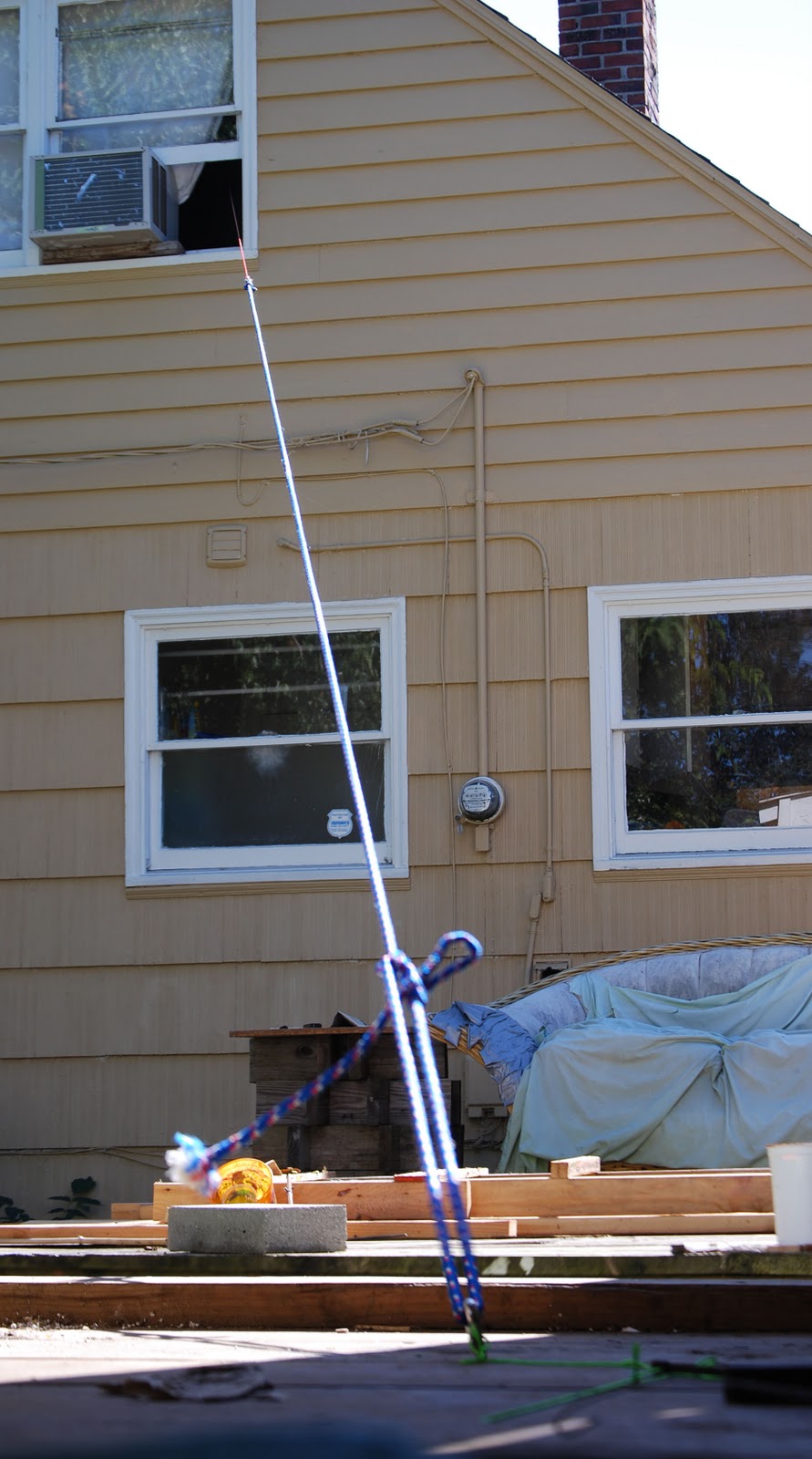
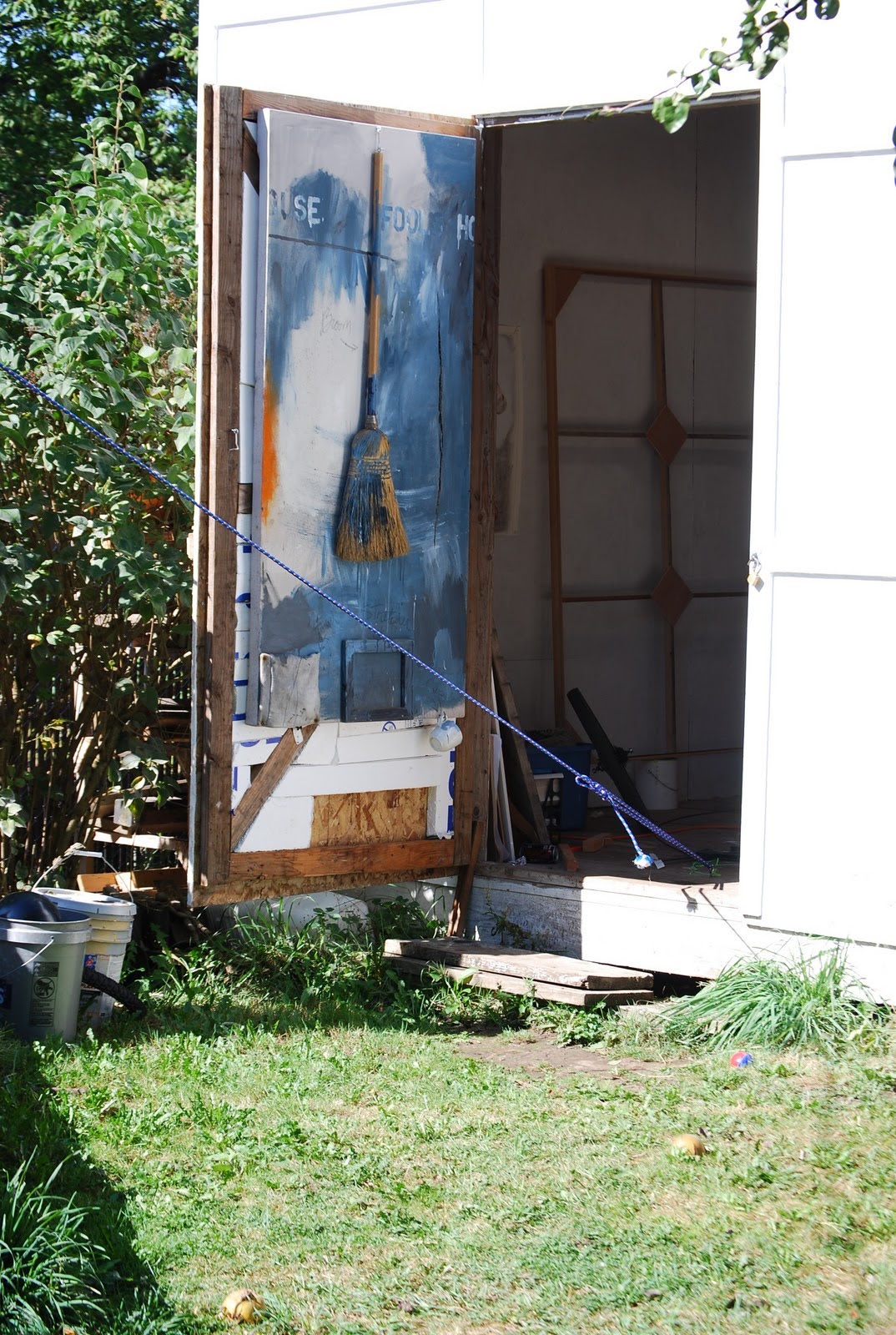
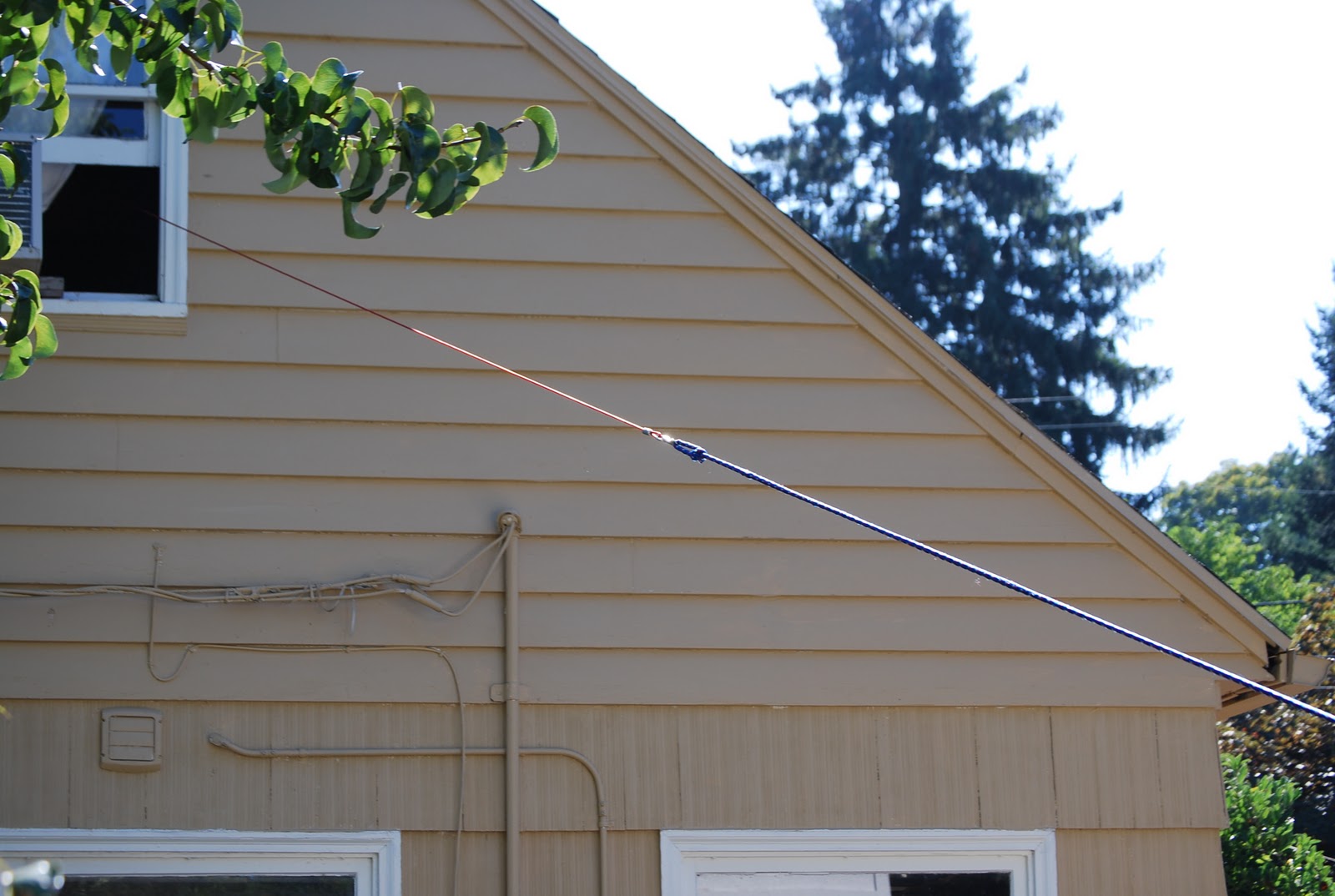
Let’s start with just a physical description of the work.  Julian used to have a loft bed, one corner of which was suspended by a cable from the ceiling.  His bed’s now on the ground but the eyelet is still attached on the ceiling.  A cable (in this case, our dog-runner leash that we use to tie Bilbo up outside) is attached and extends out through the window, across the yard, and attaches to an identical eyelet installed on the floor of my studio.  The cable isn’t actually long enough so I’ve attached some rope that utilizes my two favorite knots- the bowline knot and another one that I don’t know the name of (if it has one)- but it’s a very simple device for tightening a rope and securing it to maintain tension.  The tension is the primary point of the piece.

Years ago I became fascinated by the concept of tension as a positive force- a force that seeks resolution and thus moves one forward and driving the process of creation.  And it’s not just in art this occurs, but everywhere in life- our careers, our relationships.  Unfortunately the feeling associated with tension is negative and leads to people trying to avoid it, which also denies them the opportunity and the reward of working through it.

So I’ve toyed with several ideas using tension.  Then I saw a video on the artist Robert Irwin who posed this question: “If you could make an artwork that was absolutely amazing, but would only last for 20 minutes, would you still make it?”  The idea goes against many people’s idea that art is a precious object.  The fact that museums exist to harbor and protect these special objects endows perhaps too much emphasis on the object itself. (I’m often asked, when doing something abstract, “What is it?”- a question that also reflects this emphasis on the thing).

But what Robert Irwin was getting at was that the true ‘art’ was the experience of viewing it.  Indeed, to truly appreciate art it is more important to ask ‘What is it doing?’ or ‘How is it making me feel?’ rather than ‘What is it?’  This shifts the emphasis onto the art’s effect on the viewer, where lies its true value.

So I’ve challenged myself with this notion of not creating objects that exist in perpetuity.  So at times, I’ve brought clamps or ratcheting tie-downs when I visit someplace and do temporary tension sculptures designed to give me, and any other viewer, an experience but that, at the end of the day/trip, gets taken down- never to exist again.

Rapunzel is just such a piece.  I can recreate it at any time and will do so from time to time.  It can be redone in other locations and have similar effects but in this iteration it is definitely temporary as I can’t shut my studio door, and the children can’t shut their window, while it’s installed.  Furthermore, it’s placement adds to the meaning.  I’m particularly intrigued with the two poles in this piece- one being my studio, the other being my family.  If this piece were recreated in a different location, that aspect would change or disappear entirely.

I personally don’t read a whole lot into the title ‘Rapunzel’- but I don’t discourage its associations.  I appreciate the humor of it seeing as the piece goes through an upstairs window.  But the story of Rapunzel also speaks of imprisonment and redemption, and connections with the outside world around us.  These themes can definitely be brought to bear on one’s experience of the piece.

But my experience brings me back to the tension that holds the cable/rope in place in space.  It strikes me on a visceral level (in fact, I’m for renaming ‘visual art’ as ‘visceral art.’)  The tension affects me.   The tension creates the meaning.

FaithQuest 2011_6

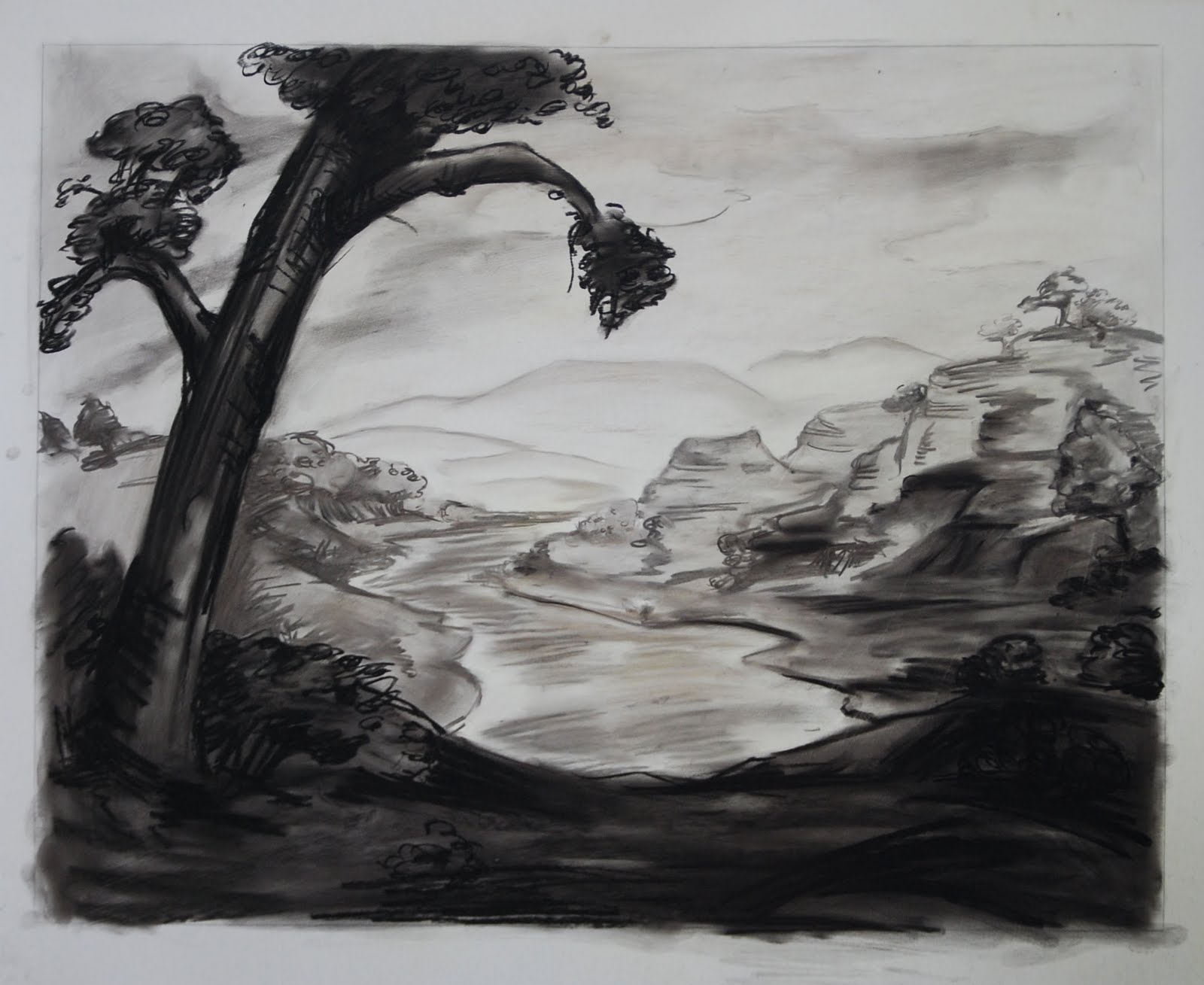
Who knows what the Holy Spirit was up to?  I talk to all the speakers about what they’ll be talking about to see what sort of ideas we can come up with.  Brian was going to stress that the Israelites had the land itself as a reminder of what God had done for them.  So I thought I’d do a ‘traditional’ landscape.  Then the Holy Spirit prompted him to go in a different direction so then it seemed like I made a picture completely unrelated to what he was talking about.  Perhaps that idea would be best expressed through the drawing and so a speaker repeating it in words was unnecessary?  Who knows? 
So here’s a little art lesson for you.  Atmospheric Perspective.  When you look far off in the distance, because of the atmosphere, things in the distance are lighter than things up close to you.   I was actually pretty nervous about doing this.  One- charcoal is kind of tough to work with.  Two- I’m pretty hard on myself in terms of quality.  I often set the bar pretty high- in this case this phenomenal drawing by the artist Claude Lorraine.
 So how do I measure up?  I feel I still have a LONG way to go skill-level-wise.  There are times when I try to imitate an artist and I feel good about it-  that I ‘know’ their work because I can do it just as well.  Not here, my friends.  I would love to master charcoal but I’m just not there yet.  (granted this Lorraine work looks to be in ink- scarier still!)  Also- a word to the wise:  if you’re going to do a landscape, don’t make it up.  Go someplace and actually draw/paint what you see.  Perhaps I would have done better positioning myself where I could see a ways up the river and draw someplace real. 
Regardless, here’s the really tough part for me.  I got lots of compliments on this one and garnered several ‘oohs’ and ‘aahs.’  It kills me that I could do something that I consider somewhat mediocre and get such a good response.  So here are a couple words to myself that I hope is taken to heart by all who use their talents in Kingdom work:  Don’t sell out to the crowd.  Don’t settle for popular.   Your audience is God.  Bring it the way He created you to.

FaithQuest 2011_5

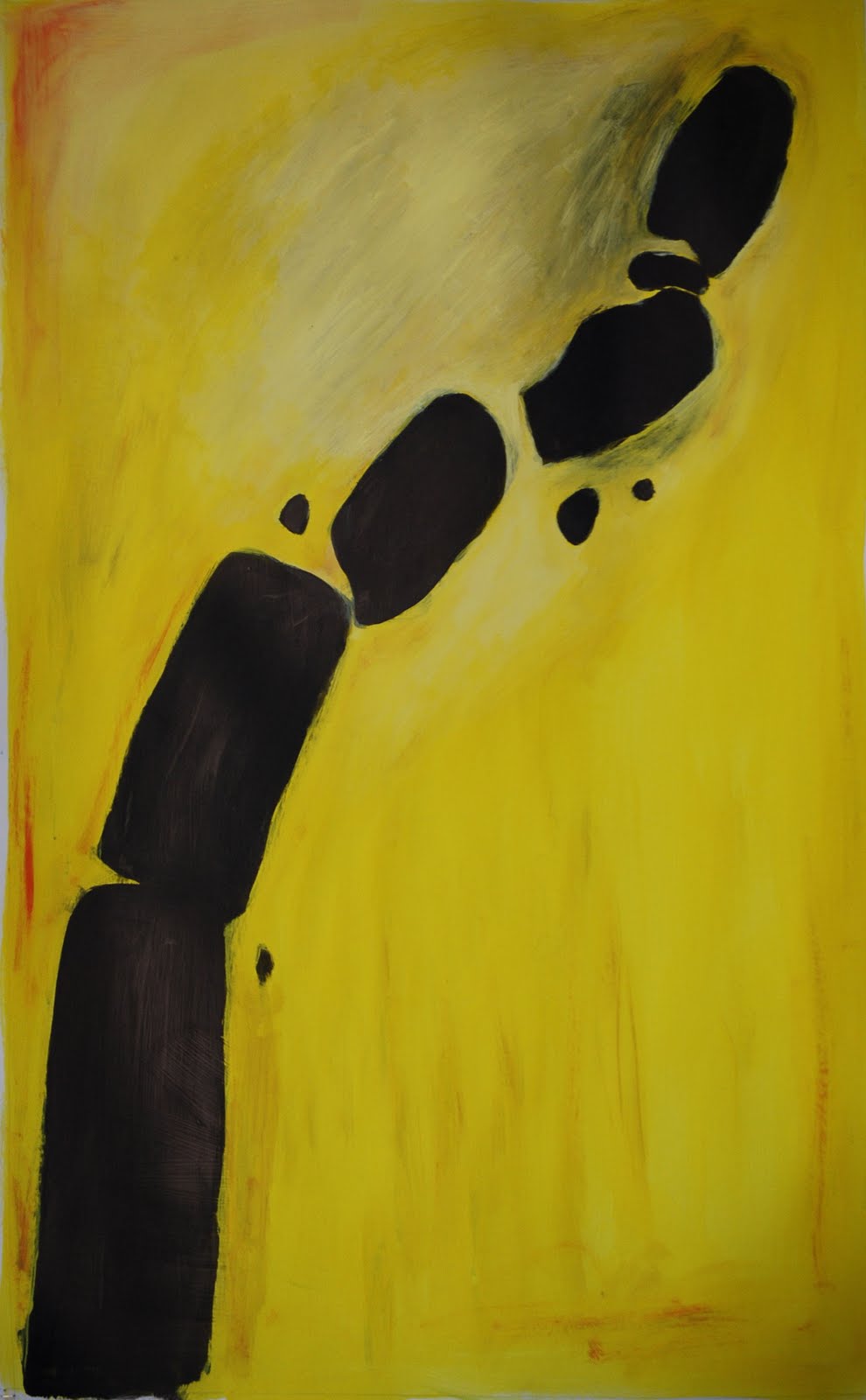
I’m a big fan of Minimalist art.  It’s called that because, well, there is often very little there.  Have you ever heard the phrase ‘Less is More’?  It comes from Minimalist art. The idea is that you maximize the effect with as little means as possible.  I think it makes it more difficult, really.  It’s easy to just keep adding stuff to a painting to make it ‘work.’  But to just have one or two shapes, and/or one or two colors- and create a powerful effect is difficult. 
A lot of it has to do with placement.  Think of it this way.  You ever been bowling?  Say you throw your bowling ball and it makes a bee-line for the gutter.  There’s no point in even watching – you just throw your hands up in the air, turn around and forget about it.  But say it’s really close.  It’s inching for the gutter but it also has a slight curve and it just might hit that one pin on the side that you need.  All of a sudden without realizing it you are making strange movements with your body, awkwardly leaning over to encourage the ball to curve more, miss the gutter, and hit the pin.  The placement of the ball in relation to the gutter and the pin creates a physical sensation in you; prompting you to make ‘sympathetic’ movements to exert influence or control over the ball.
That’s what Minimal art is all about- not really illustrating something but trying to create an almost physical sensation within the viewer.  That’s what I’ve attempted to do here, only in a slightly illustrative mode as well. 
The wall of Jericho is falling.  I reduced it down- minimized it, if you will- to just black shapes on a yellow background.  But the proportion/size of the painting, the relationship of the wall pieces to the edge of the painting, the physical density of the yellow and the black- all are enlisted to give the sensation of this wall falling seemingly for no reason at all.  There is nothing pushing, pulling, or crashing into it. 
God is making the wall fall.  I hope you feel it.

FaithQuest 2011_4

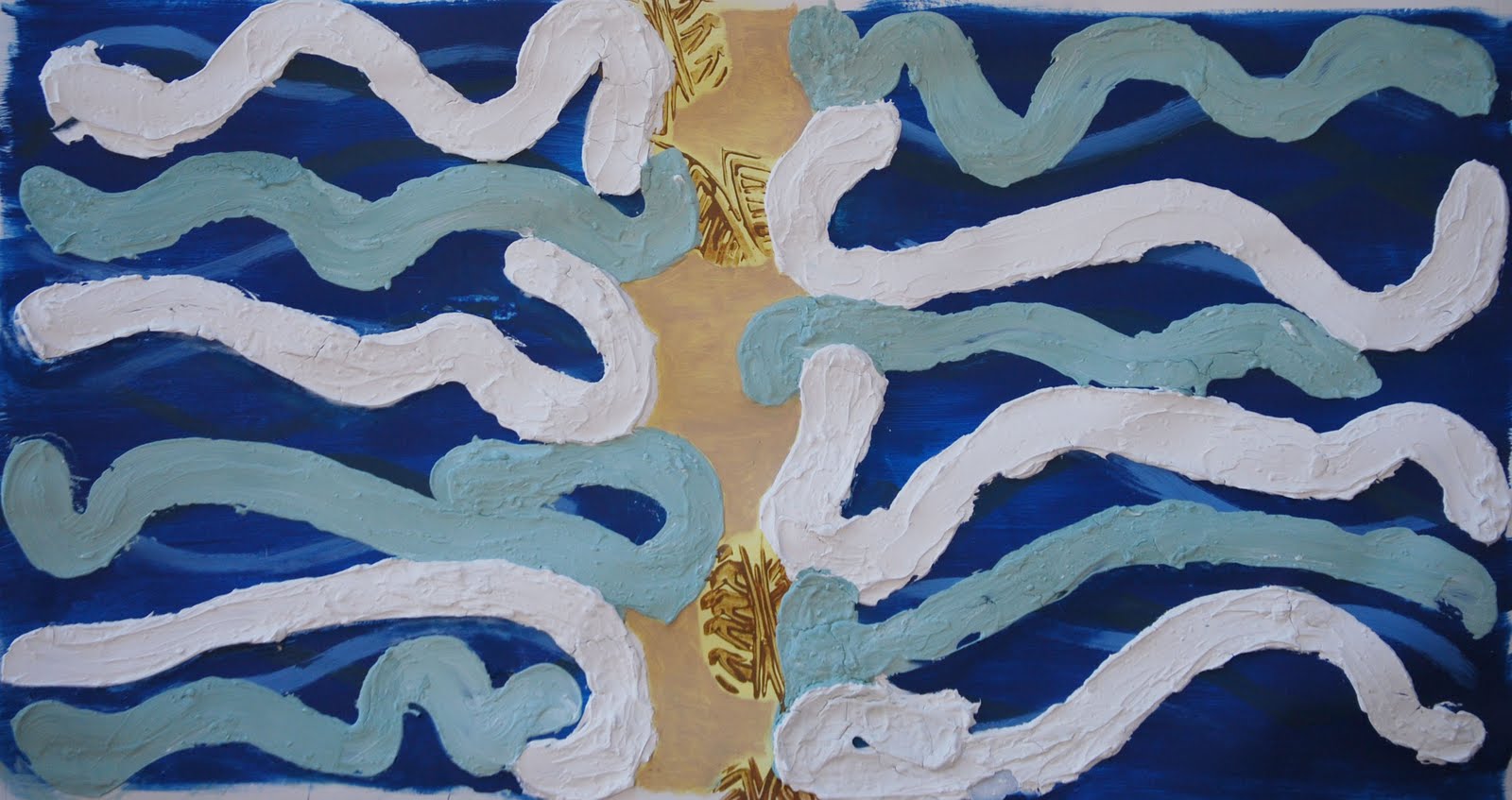
Picasso once said, “Good artists borrow; Great artists steal.”  I admit it,  I totally stole the imagery on this one (it’s ok, though, because he stole it too.)  One of my former professors in graduate school, a phenomenal artist named John Millei has made a series of works using this type of imagery for water.  He stole the idea from some tapestries in Angers, France (the artistic term for ‘stealing’ is ‘appropriation’).  I love the power of a line- waving, bending, moving through space and reacting to its environment.  And these lines, serving as waves, are so powerful to me; so expressive.
Maritime #10 (The Deluge) by John Millei
So I decided to use them in this painting of the water of the Jordan River dividing (to his credit, his paintings are much better than mine. In my defense, it was my first time).  And as Troy let us know- the Israelites had to really step out in faith on this one.  Before, when they were all kids and their parents were being led out from Egypt, Moses went up, raised his arms and staff and the waters parted before them.  Then they just had to walk through like it was no big deal.  This time, though, the priests carrying the ark had to step in the water first.  It wasn’t until they placed their foot in the running current that the water began to back up and split.  So here you see, as the water is dividing, there are footprints already in the sand.